
What Is a Dental CAPEX Plan — And Why Every Multi-Location Practice Needs One
May 21, 2026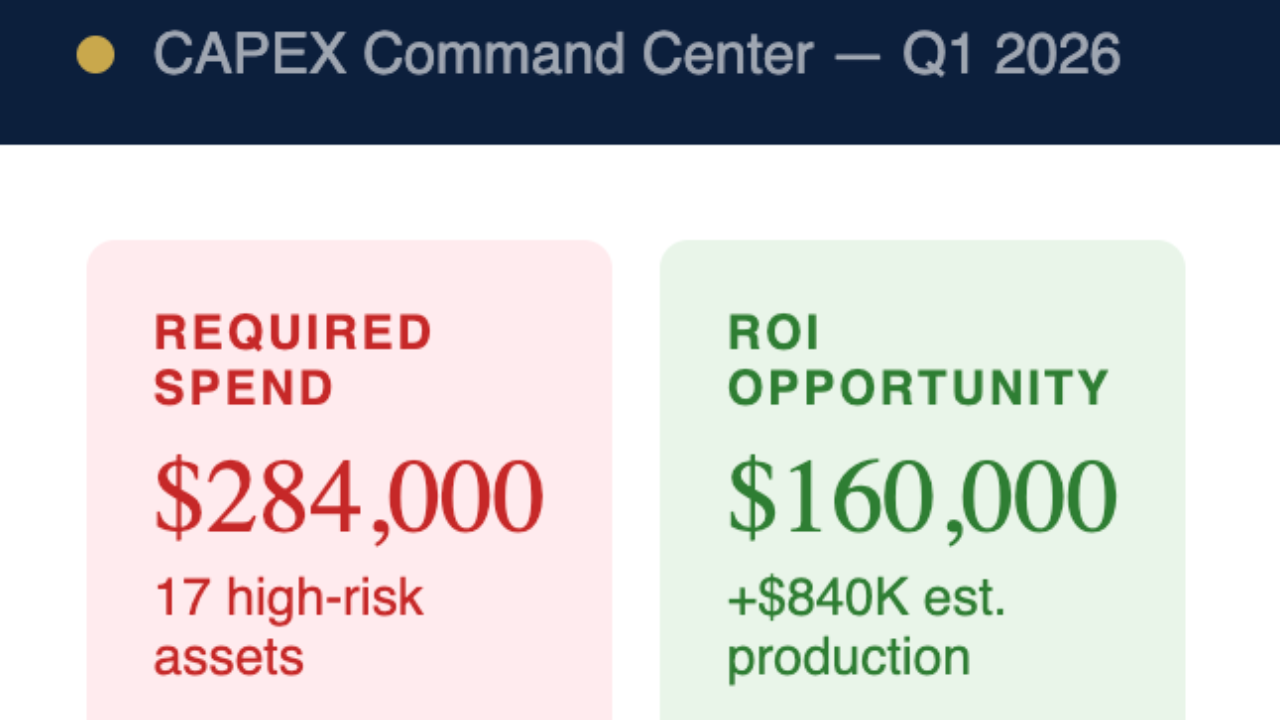
If you manage equipment decisions for more than one dental location, you've probably felt the problem before you had a name for it.
One year, nothing major needs replacing. The next year, two chairs, a sterilizer, and a panoramic unit all hit end of useful life at the same time — and suddenly you're staring at $120,000 in unplanned capital spend. You patch what you can, defer what you must, and hope nothing breaks at the worst possible moment.
This isn't bad luck. It's the absence of a CAPEX plan.
What CAPEX Means (Plain Language Version)
CAPEX stands for capital expenditures — significant purchases of physical assets that have a useful life beyond the current year. In a dental group, CAPEX is primarily equipment: chairs, sterilizers, imaging systems, delivery systems, and the infrastructure that supports clinical operations.
Operating expenses (OPEX) are the day-to-day costs — supplies, staff, rent, utilities. CAPEX is different because the asset you're buying lasts for years, gets depreciated over time, and represents a balance sheet entry rather than just an income statement line.
Every dental group spends CAPEX. The question is whether that spending is planned or reactive.
Reactive vs. Planned Capital Spending
Reactive CAPEX happens when something breaks. The sterilizer fails on a Tuesday. You call for emergency service. If it's not fixable, you're on the phone to your dealer trying to source a replacement under time pressure, probably paying emergency installation rates, definitely not negotiating your best price. The decision gets made in a crisis.
Planned CAPEX happens when you've identified that the sterilizer is in its 11th year of service, assessed its current condition, estimated its replacement cost, and put a budget line in next year's plan for the replacement purchase — on your timeline, at a negotiated price, without clinical disruption.
The financial difference between reactive and planned CAPEX for a 10-location group can be $40,000 or more per year in emergency service costs, premium pricing, and downtime-related production loss. For a 30-location group, it's a CFO-level number.
What a Dental CAPEX Plan Actually Includes
A proper CAPEX plan for a dental group has five components:
1. Asset inventory with condition and age. You cannot plan replacements without knowing what you have, how old it is, and what condition it's in. This sounds obvious. Most groups don't have it in a usable format.
2. Useful life benchmarks by category. Different equipment types have different expected service lives:
- Dental chairs: 15–20 years with proper maintenance
- Sterilizers: 10–15 years
- Digital sensors: 7–10 years (often limited by software compatibility before physical failure)
- Panoramic/CBCT units: 10–15 years
- Compressors and vacuum systems: 10–15 years
- Delivery systems: 15–20 years
3. Replacement cost estimates. Current MSRP for equivalent new equipment, by asset. This is the budget number, not the FMV.
4. Risk scoring. Assets approaching end of useful life need to be prioritized — not all aging equipment is equally urgent. A 12-year-old chair in excellent condition at a low-volume location is a different risk than a 12-year-old vacuum system serving four operatories.
5. Multi-year rolling forecast. The goal is a 3-5 year rolling view that shows expected replacement spend by year, by location. This is the document your CFO can present to the board and plan financing around.
The Capital Smoothing Problem
One of the most valuable functions a CAPEX plan serves is smoothing spend across years. If your analysis shows three locations converging on major replacements in year two, you have options: accelerate some replacements into year one, defer others into year three, or plan financing specifically for the year-two spike. None of those options exist if you don't see the spike coming.
Capital smoothing also changes your relationship with your equipment dealers. A group that shows up with a 3-year replacement schedule can negotiate volume pricing, preferred installation scheduling, and service contract terms. A group that calls when something breaks negotiates from a reactive position.
What Belongs in a DSO Board Presentation on Equipment
If you're presenting equipment capital needs to a DSO board or PE sponsor, the format they expect isn't a list of aging equipment — it's a financial narrative:
- Total fleet replacement value across all locations
- Near-term capital requirements (next 12-24 months) with dollar estimates
- Risk exposure from deferred replacements (what does it cost if these fail before scheduled replacement?)
- Proposed capital schedule with financing options
This is the conversation DentalAssetIQ's CAPEX module is designed to produce. The asset data, risk scores, and replacement cost estimates are already in the platform — the CAPEX view surfaces them as a capital narrative rather than an equipment list.
Explore the CAPEX planning module → See how fleet valuation feeds capital planning → Start planning your group's capital schedule →
Common Questions
What's the difference between CAPEX and OPEX in a dental practice?
CAPEX covers significant equipment purchases with a multi-year useful life — chairs, sterilizers, imaging systems. OPEX covers day-to-day costs like supplies, staff, and rent.
What are the five components of a dental CAPEX plan?
Asset inventory with condition and age, useful life benchmarks by category, replacement cost estimates, risk scoring, and a multi-year rolling forecast.
How long do dental chairs typically last?
15–20 years with proper maintenance, compared to 10–15 years for sterilizers and 7–10 years for digital sensors.